Reducing bushfire risk is an important part of how CS Energy protects its people, assets, environment, and neighbouring communities.
Over winter, our fire management specialists completed planned hazard reduction burns at both Callide and Kogan Creek power stations, taking advantage of cooler weather conditions to safely reduce vegetation fuel loads across key areas of the sites.
“Managing bushfire risk is about planning ahead,” said Head of Environment and Cultural Heritage Brendan Monckton.
“With cooler weather and some welcome rain, conditions were ideal for the work.”
Controlled burns were carried out in June across approximately 214 hectares of high fuel load vegetation said Sally Bulten, Environment and Stakeholder Business Partner at Callide Power Station.
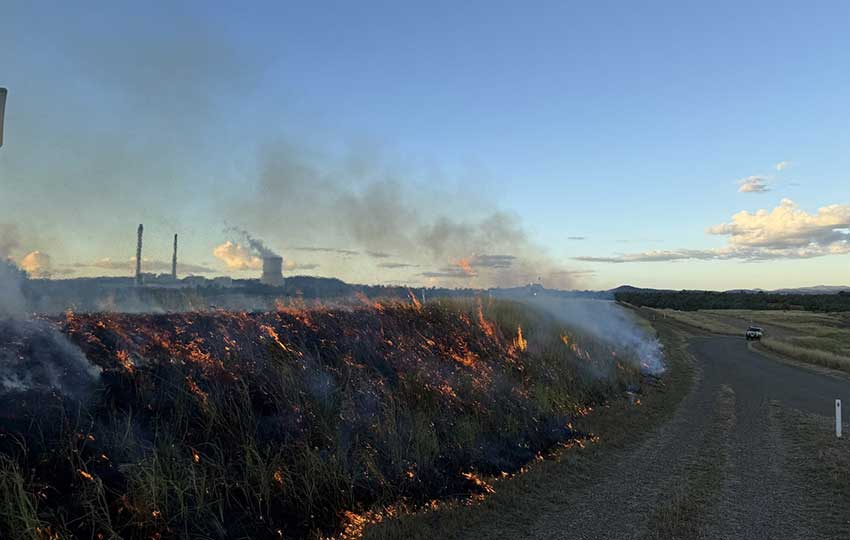
Above: Fire hazard reduction burns were carried out in June at Callide Power Station.
“The burns were carried out over several planned areas across the site, with conditions closely monitored to ensure the work could be completed safely, effectively, and with minimal disruption to ongoing operations,” she said.
The following month, a separate hazard reduction burn was conducted at Kogan Creek Power Station.
“Due to cold and damp conditions overnight, the burn was undertaken during the middle of the day,” said Paige Salmon, Kogan Creek Power Station Environment and Stakeholder Business Partner.
“This work focused on reducing fuel loads within the offset area east of the power station, and on the land between the power station and Banana Bridge Road, covering 125 hectares in total.”
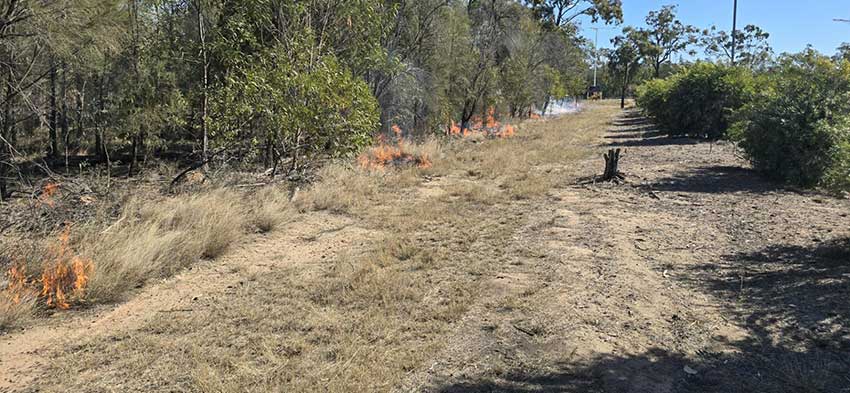
Above: Fire hazard reduction burns were carried out in July at Kogan Creek Power Station.
Why hazard reduction burns matter
Hazard reduction burns are a proactive way to lower the risk and potential impact of bushfires by reducing the amount of vegetation available to fuel a fire.
Brendan said that the burns are designed to achieve safety outcomes while minimising environmental impacts.
“We used a planned approach that allows us to manage vegetation responsibly while protecting sensitive habitats, significant plant species, and cultural heritage,” he said.
“Conducting burns in smaller sections helps reduce the impacts on local wildlife, too.”
Removing excess vegetation also reduces fuel for a fire if it occurs.
“We reduce the fuel and if a fire occurs, it helps protect our people, our environment, our assets, and our neighbours.”
The burns also support a range of important activities across our sites, including supporting the inspection and maintenance activities around ash dams; reducing impacts on wildlife by burning smaller sections over planned areas; protecting sensitive ecosystems and important plant species; and enabling cultural heritage surveys and walkovers with Traditional Owners.
“The work is largely unseen once it’s completed, but it’s an important investment in the long-term safety and resilience of our people, sites, and communities,” Brendan said.
“It’s about being prepared before the risk arrives.”
Rehabilitation and fire risk management at Greenbank Battery
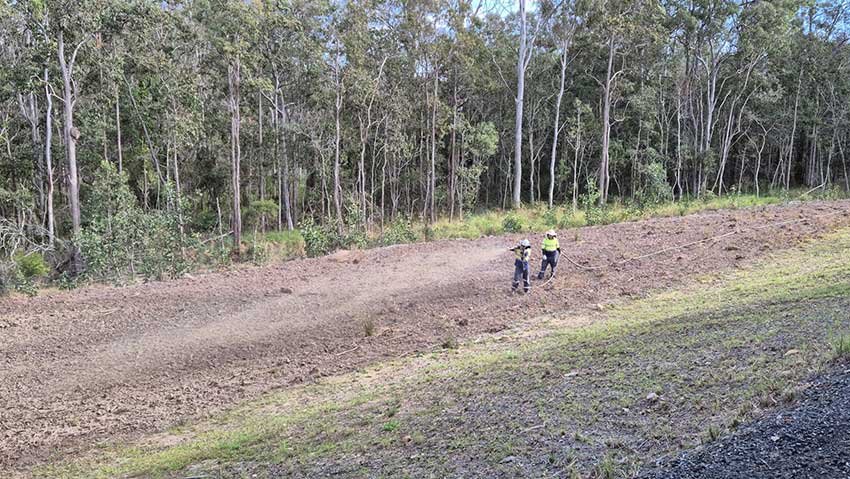
Above: A targeted weed spraying program and the application of hydromulch was carried out at the Greenbank Battery.
The team at Greenbank Battery also completed a targeted weed spraying program and the application of hydromulch within the site’s Asset Protection Zone (APZ) as part of its land rehabilitation and ongoing bushfire risk management activities.
The APZ is a key requirement of the site’s Bushfire Management Plan, providing a managed vegetation buffer that helps separate potential bushfire hazards from critical infrastructure.
“Regular maintenance is essential to ensure the APZ continues to effectively protect the asset,” said Brendan.
“As part of the works, weed spraying was undertaken to control unwanted vegetation growth, while hydromulch was applied at a rate of four tonnes per hectare to maintain stable vegetation cover.”
Hydromulch is a sprayed mixture of seed, mulch, fertiliser, and binding agents that promote rapid plant establishment, and protects exposed soils from erosion.
“The seed mix was carefully selected to deliver both rapid initial ground cover and sustainable long-term vegetation, helping to suppress weed growth, minimise erosion, and maintain the effectiveness of the APZ.”